
A leaking roof rarely starts with water dripping through the ceiling.
In most cases, the warning signs appear weeks, months or even years earlier. A cracked flashing, a blocked outlet, damaged waterproofing or a loose roof edge may seem insignificant at first. Left unnoticed, these small defects allow water to penetrate the building, leading to damaged insulation, structural deterioration, mould growth and costly repairs.
For commercial buildings, roof inspections shouldn’t be viewed as an emergency response—they should be part of a planned maintenance strategy.
Whether you manage an office block, warehouse, retail unit or residential development, regular roof inspections help identify potential issues before they disrupt your business or endanger occupants.
Why Commercial Roof Inspections Are So Important
The roof is one of the hardest-working parts of any building.
Every day it is exposed to:
- heavy rainfall
- strong winds
- UV radiation
- freezing temperatures
- thermal expansion
- pollution
- standing water
Unlike internal defects, roof problems often remain hidden until damage has already occurred.
By the time water enters the building, the original defect may have existed for months.
Routine inspections help detect these problems early, reducing repair costs and extending the lifespan of the roof.
Common Roof Defects Found During Inspections
Every commercial roof is different, but many develop the same recurring problems.
Damaged Flashings
Flashing protects vulnerable areas around roof edges, walls and penetrations.
Over time it may become:
- cracked
- detached
- corroded
- lifted by strong winds
Once flashing fails, water can enter beneath the roofing system.
Blocked Drainage Systems
Standing water is one of the leading causes of roof deterioration.
Inspect:
- gutters
- outlets
- rainwater pipes
- internal drains
Leaves, moss and debris can quickly block drainage systems, especially after storms.
Ponding Water
Water should drain efficiently after rainfall.
If water remains on the roof for more than 48 hours, it may indicate:
- poor drainage
- structural movement
- blocked outlets
- roof settlement
Standing water accelerates membrane deterioration and increases the likelihood of leaks.
Damaged Waterproofing Membranes
Flat roofs rely on waterproof membranes to protect the structure.
Common signs of deterioration include:
- splits
- blistering
- lifting joints
- punctures
- shrinkage
Minor membrane defects are usually inexpensive to repair when identified early.
Roof Edge Damage
Roof edges experience some of the strongest wind forces.
Inspect for:
- loose coping stones
- damaged edge trims
- cracked sealants
- detached flashings
Ignoring edge defects often leads to larger failures during severe weather.
Cracks Around Roof Penetrations
Every pipe, vent, skylight and HVAC installation creates another potential entry point for water.
Check around:
- ventilation systems
- skylights
- service penetrations
- roof-mounted equipment
These areas should always receive extra attention during inspections.
Warning Signs Inside the Building
Roof defects don’t always reveal themselves on the roof.
Sometimes the first evidence appears inside the property.
Common indicators include:
- ceiling stains
- damp walls
- peeling paint
- mould growth
- musty odours
- unexplained leaks
When these symptoms appear, a roof inspection should be arranged as soon as possible.
How Often Should Commercial Roofs Be Inspected?
Inspection frequency depends on the building, but a good maintenance schedule includes:
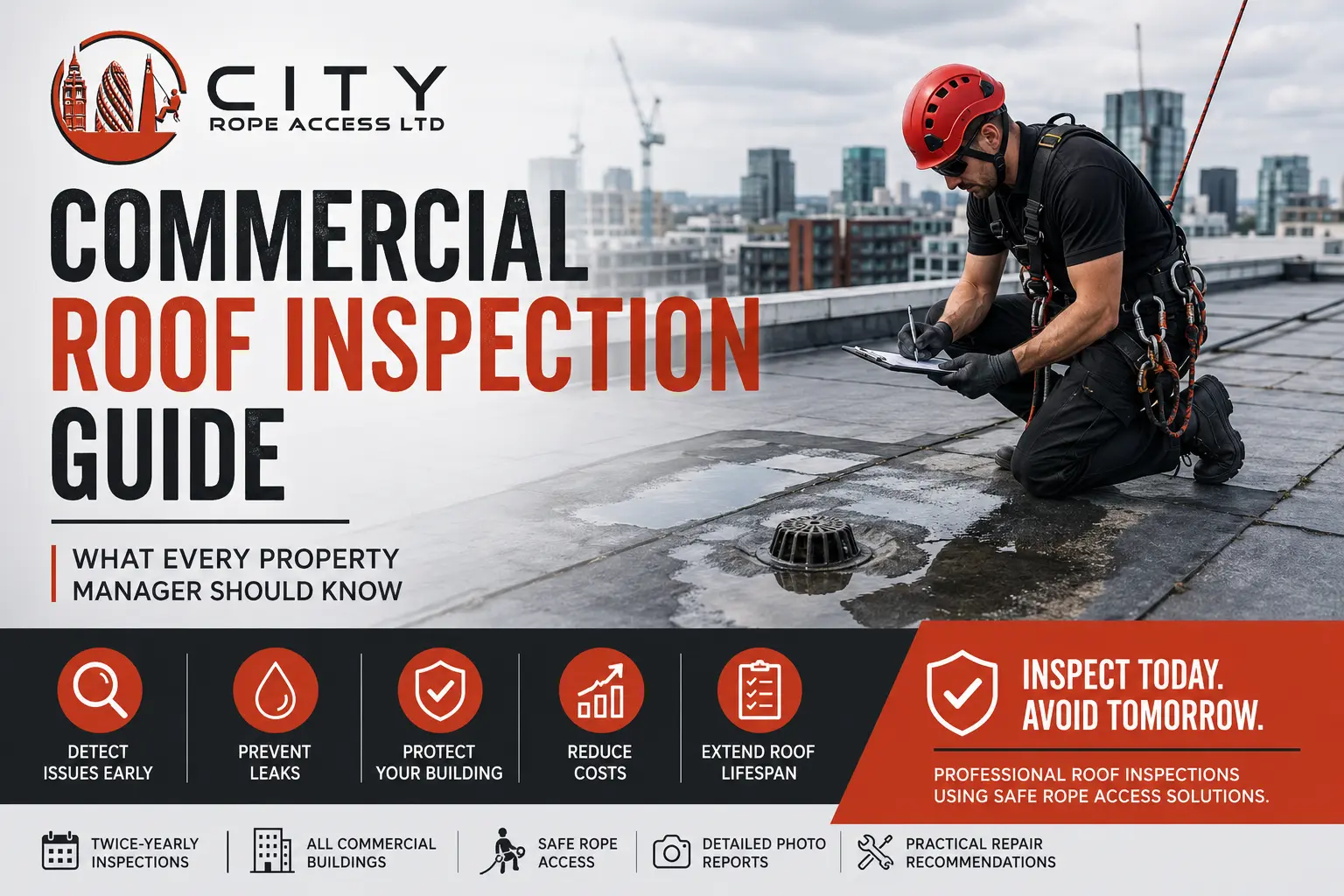
Twice per year
- Spring inspection
- Autumn inspection
Additional inspections
- After severe storms
- Following high winds
- Before major refurbishment
- After reports of water ingress
Buildings in exposed locations may require more frequent inspections.
Why Rope Access Is an Effective Roof Inspection Solution
Many roof areas are difficult to inspect safely using conventional methods.
Professional Rope Access Services
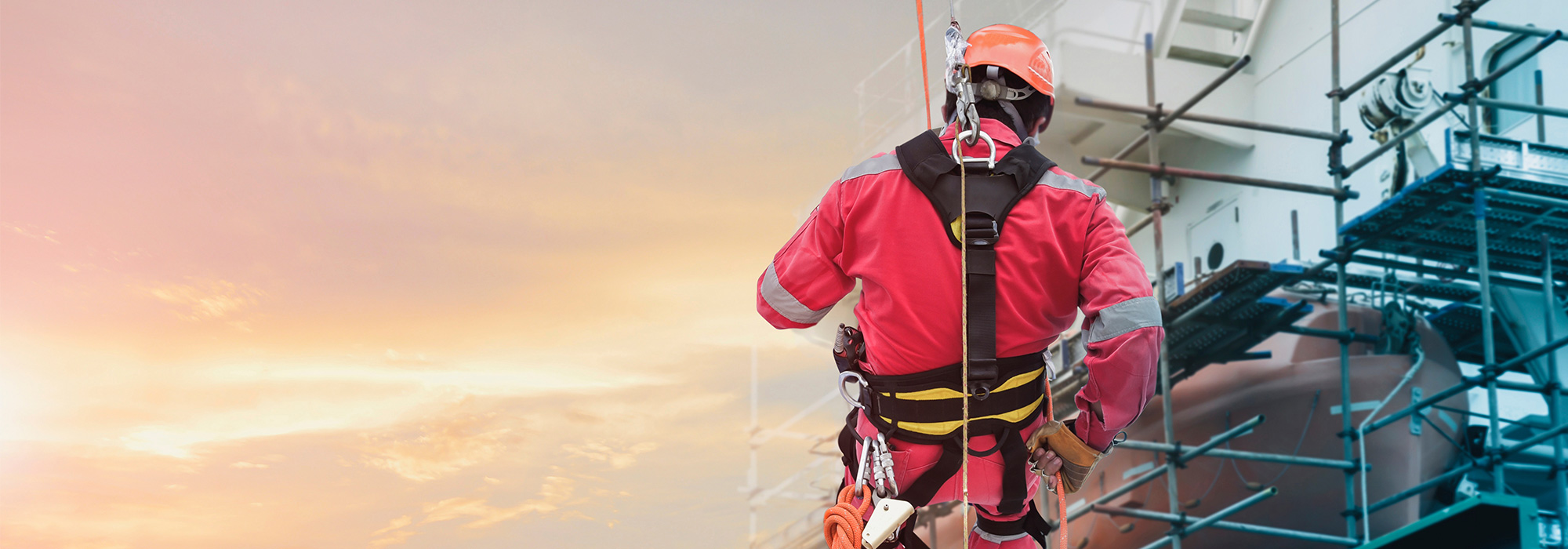
allow technicians to access roof edges, façades and difficult locations without extensive scaffolding.
Advantages include:
- rapid deployment
- reduced costs
- minimal disruption
- close-up inspections
- detailed photographic reports
- safe access to difficult areas
Where roof defects are linked to façade problems, rope access allows both areas to be inspected during the same visit.
Roof Problems Often Lead to Façade Problems
Water rarely stays where it first enters.
A failed roof detail can allow moisture to travel behind the façade, leading to:
- cracked render
- damaged brickwork
- failed sealants
- concrete deterioration
- internal damp
That’s why roof inspections should always be considered alongside regular Building Façade Inspections.
Preventative Maintenance Saves Thousands
One of the biggest misconceptions in commercial property management is that maintenance is expensive.
In reality, emergency repairs are expensive.
Replacing a damaged flashing may cost very little compared to repairing water-damaged ceilings, electrical systems, insulation and internal finishes.
Preventative inspections allow repairs to be scheduled before defects escalate into major structural problems.
What Should a Professional Roof Inspection Include?
A comprehensive inspection should assess:
- roof coverings
- flashings
- drainage systems
- waterproof membranes
- parapets
- expansion joints
- roof edges
- skylights
- service penetrations
- signs of structural movement
- photographic documentation
- repair recommendations
The inspection should also prioritise defects according to urgency, helping property managers plan maintenance budgets more effectively.
Don’t Wait Until Water Finds Its Way Inside
Most roof failures begin with defects that are small, inexpensive to repair and easy to overlook.
A cracked flashing.
A blocked drain.
A loose roof edge.
Unfortunately, these seemingly minor issues rarely resolve themselves.
Regular commercial roof inspections help identify hidden defects before they develop into leaks, structural deterioration and costly emergency repairs.
If your commercial property hasn’t had a professional roof inspection recently, the team at City Rope Access can safely inspect difficult-to-reach roof areas using IRATA-certified rope access techniques, providing detailed reports and practical maintenance recommendations that help protect your building for years to come.
FAQ
How often should a commercial roof be inspected?
Most commercial roofs should be inspected at least twice a year and after severe weather events.
What is the most common cause of commercial roof leaks?
Damaged flashings, blocked drainage systems and deteriorated waterproof membranes are among the most common causes.
Can rope access be used for roof inspections?
Yes. Rope access provides safe and efficient access to roof edges, façades and other difficult-to-reach areas without the need for extensive scaffolding.
Why are roof inspections important?
Regular inspections help identify defects early, reduce repair costs, prevent water ingress and extend the lifespan of the roofing system.