

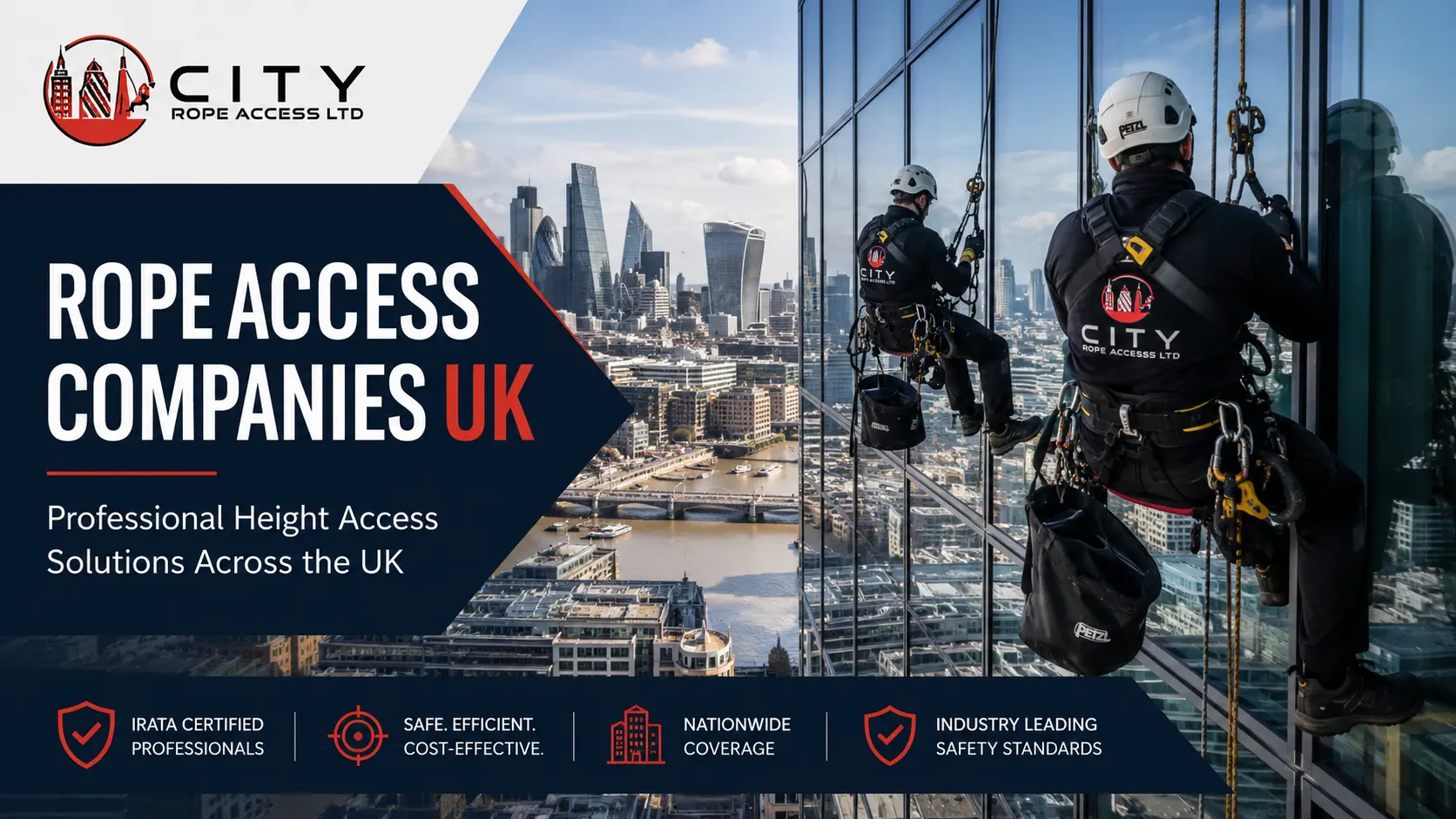
Choosing a rope access company is not only about finding a contractor that can reach a difficult part of a building.
The company also needs to understand the work being carried out, the condition of the building, the access requirements and the practical risks associated with the project.
Different rope access companies may specialise in different types of work, from inspections and cleaning to concrete repairs, sealant replacement, painting, leak investigation and wider building maintenance.
This guide explains what property managers, facilities managers and building owners should consider when comparing rope access contractors in the UK.
What Is a Rope Access Company?
A rope access company provides technicians who use specialist rope systems to reach difficult or high-level working areas.
Rope access is commonly associated with tall buildings, but it can also be useful on properties where ground access is restricted, elevations are difficult to reach or work is concentrated on a relatively small number of locations.
The access method itself is only one part of the project. The contractor also needs the appropriate experience for the actual inspection, maintenance or repair being undertaken.
What Services Do Rope Access Contractors Provide?
The exact service range varies between companies. Some contractors focus primarily on access, while others provide wider building maintenance and repair services.
Typical rope access work can include:
- Façade inspections
- Concrete repairs
- Brick and stone repairs
- Repointing
- Sealant and mastic replacement
- Leak investigation
- Exterior painting
- Cladding work
- Window maintenance
- Window cleaning
- Exterior building cleaning
- Bird proofing
- Rainwater system repairs
Before appointing a contractor, check that the company has relevant experience with the specific type of work required rather than choosing solely on the basis that it provides rope access.
What Should You Check Before Hiring a Rope Access Company?
A good comparison should look beyond the headline price and consider how the contractor plans, accesses and delivers the work.
Relevant Experience
Check whether the contractor has experience with the type of building, material and work involved in your project.
Technician Qualifications
Ask what rope access qualifications the technicians hold and how the proposed team will be structured for the work.
RAMS & Planning
The contractor should understand the work area, access method, hazards and project requirements before work begins.
Defined Scope of Work
A quotation should make clear what areas are included, what work is proposed and any limitations or exclusions.
Reporting
For inspections and maintenance work, ask whether photographic documentation or another form of reporting is included.
Previous Projects
Relevant project examples can help show whether the contractor has previously worked on similar buildings or maintenance problems.
Check the Contractor’s Rope Access Qualifications
Technician qualifications are an important part of selecting a rope access contractor.
Ask the company what qualifications are held by the technicians who will carry out the work and whether the proposed team structure is appropriate for the project.
For companies using the IRATA system, individual technicians can hold different qualification levels depending on their training and experience.
A company using IRATA-qualified technicians should not automatically be described as an IRATA member company unless that membership has been separately confirmed.
The important point for the client is to understand who will be carrying out the work and whether the team is suitable for the required scope.
Ask for a Clear Scope of Work
A useful quotation should describe more than simply “rope access works” or “façade repairs”.
Depending on the project, it may need to clarify:
- Which elevations are included
- Which defects or work areas will be addressed
- The proposed repair or maintenance method
- Whether materials are included
- Whether photographs or reporting are provided
- Whether access to roof areas is required
- Any areas excluded from the quotation
- Whether further investigation may be required
This makes it easier to compare quotations from different contractors on a like-for-like basis.
Why RAMS Matter on Rope Access Projects
RAMS — risk assessments and method statements — form part of the planning for many building maintenance projects.
The documentation should reflect the actual work rather than being treated as a generic document used for every building.
Relevant considerations can include:
- Building configuration
- Work location
- Access arrangements
- People below the work area
- Materials and equipment
- Weather exposure
- Other contractors on site
- Site-specific restrictions
The exact documentation required depends on the project and client requirements.
Choose a Company With Experience in the Actual Repair
Being able to reach a defect does not automatically mean a contractor has the expertise to repair it correctly.
For example, a company carrying out concrete repair should understand the repair scope and condition of the concrete, while a contractor replacing external sealant should understand the relevant joints and interfaces.
Likewise, a close-up façade inspection is different from a formal structural assessment, which may require an appropriately qualified specialist.
When comparing rope access companies, ask specifically about experience with the service you require.
Look at Previous Rope Access Projects
Project examples can help demonstrate the type of buildings and work a contractor has previously undertaken.
Useful case-study information can include:
- Property type
- Location
- Approximate work area
- Access challenge
- Type of repair or maintenance
- Photographs of completed work
City Rope Access has worked on projects including commercial, residential and institutional properties in London.
Examples can be found on our rope access projects page.
Should You Choose the Cheapest Rope Access Contractor?
Price is an important consideration, but the cheapest quotation may not always represent the same scope of work.
Two quotations can differ because they include different:
- Work areas
- Repair methods
- Materials
- Access requirements
- Reporting
- Number of technicians
- Project duration
Before comparing prices, check whether each contractor is quoting for the same scope.
A quotation that initially appears more expensive may include work or reporting that another contractor has excluded.
Rope Access vs Other Access Methods
A reputable contractor should not assume rope access is automatically the correct solution for every building.
The project may also be suitable for:
- Scaffolding
- Mobile elevated work platforms
- Permanent building access systems
- Internal access
- A combination of different methods
Rope access can be particularly useful for localised high-level work, but another access method may be more appropriate where large areas require continuous access or substantial equipment must remain at the work face.
The decision should be based on the building and project scope rather than on a general claim that one access method is always cheaper, safer or faster.
What Questions Should You Ask a Rope Access Company?
Before appointing a contractor, consider asking:
- Have you completed similar work before?
- What rope access qualifications will the technicians hold?
- What exactly is included in the quotation?
- How will the work area be accessed?
- Will RAMS be prepared for the project?
- Will photographs or reporting be provided?
- Are materials included in the quotation?
- What happens if additional defects are discovered?
- Does the project require another specialist?
- Is rope access definitely the most appropriate access method?
Clear answers to these questions make it easier to understand how the contractor intends to approach the project.
Red Flags When Comparing Rope Access Companies
Be cautious where a quotation or contractor provides very little information about how the work will actually be delivered.
Potential warning signs can include:
- An unclear or extremely vague scope
- No explanation of the proposed repair method
- No discussion of access requirements
- Claims that rope access is always the best solution
- Guarantees made before the defect has been properly assessed
- No distinction between visual inspection and specialist diagnosis
- No clarification of what is excluded from the quotation
A professional proposal should make the scope and limitations reasonably clear before work begins.
A Simple Way to Compare Rope Access Contractors
Define the Problem
Identify what needs to be inspected, repaired or maintained and where it is located.
Compare Scope
Check that competing quotations include the same work areas, materials and reporting requirements.
Check Experience
Look for relevant experience with the particular building defect or maintenance service.
Review the Proposal
Confirm how the work will be accessed, delivered, documented and handed over.
Rope Access Companies for Building Maintenance
Property managers often need more than access alone. A building may require investigation followed by maintenance or repair to several external components.
Examples can include:
- Cracked masonry
- Concrete deterioration
- Failed sealant joints
- Water ingress
- Damaged cladding
- Exterior coatings
- Window defects
- Rainwater system problems
Where several issues are present, it can be useful to appoint a contractor that can coordinate the relevant high-level maintenance work within a clearly defined scope.
See our rope access building maintenance and repair services .
Rope Access Inspections Before Repairs
In some cases, the full extent of a defect cannot be determined from ground-level photographs alone.
Close-up inspection can help document:
- Cracking
- Loose materials
- Failed joints
- Corrosion
- Water staining
- Concrete deterioration
- Cladding defects
The findings can then help define a more accurate maintenance or repair scope.
For difficult-to-access external areas, see our rope access building inspections and façade surveys .
Choosing a Rope Access Company for London Projects
If the building is located in London, local site conditions can influence the way the work is planned.
Considerations may include:
- Restricted ground access
- Busy pedestrian areas
- Courtyards
- Commercial entrances
- Neighbouring properties
- Roof access arrangements
- High-rise building layouts
City Rope Access provides rope access building maintenance, inspection and repair services across London.
For our main service overview, visit City Rope Access London .
Comparing Rope Access Contractors for a London Project?
Send us photographs of the building, the location of the work and a description of the inspection, maintenance or repair you require.
We can review the project scope and access requirements and provide information about how the work could be approached.
Frequently Asked Questions
What should I look for in a rope access company?
Look for relevant experience, appropriately qualified technicians, a clear scope of work, suitable project planning and an explanation of how the work will be accessed and documented.
Are all rope access companies the same?
No. Contractors can differ in the types of work they specialise in, the buildings they work on and the additional inspection, maintenance or repair services they provide.
Should I choose a rope access contractor based only on price?
Price should be considered alongside the scope of work. Before comparing quotations, check that they include the same areas, materials, reporting and repair requirements.
Does a rope access company need experience with my type of repair?
Relevant technical experience is important because rope access only provides access to the work area. The contractor still needs the appropriate knowledge for the inspection, maintenance or repair being carried out.
What information should I send when requesting a rope access quotation?
Useful information includes the building address, photographs, approximate height or floor level, location of the work and a description of the defect or service required.
Is rope access suitable for every project?
No. Suitability depends on the building, work area, access arrangements, project duration and type of work. Scaffolding, MEWPs or another access method may be more appropriate for some projects.
What are RAMS?
RAMS commonly refers to risk assessments and method statements used to document how work is planned and relevant risks are managed. The exact documentation required depends on the project and client requirements.
Can a rope access company inspect a façade before quoting repairs?
Yes, where the building and access arrangements are suitable. A close-up visual inspection can help document visible defects and define a repair scope. Specialist structural or technical assessment may still be required depending on the findings.