

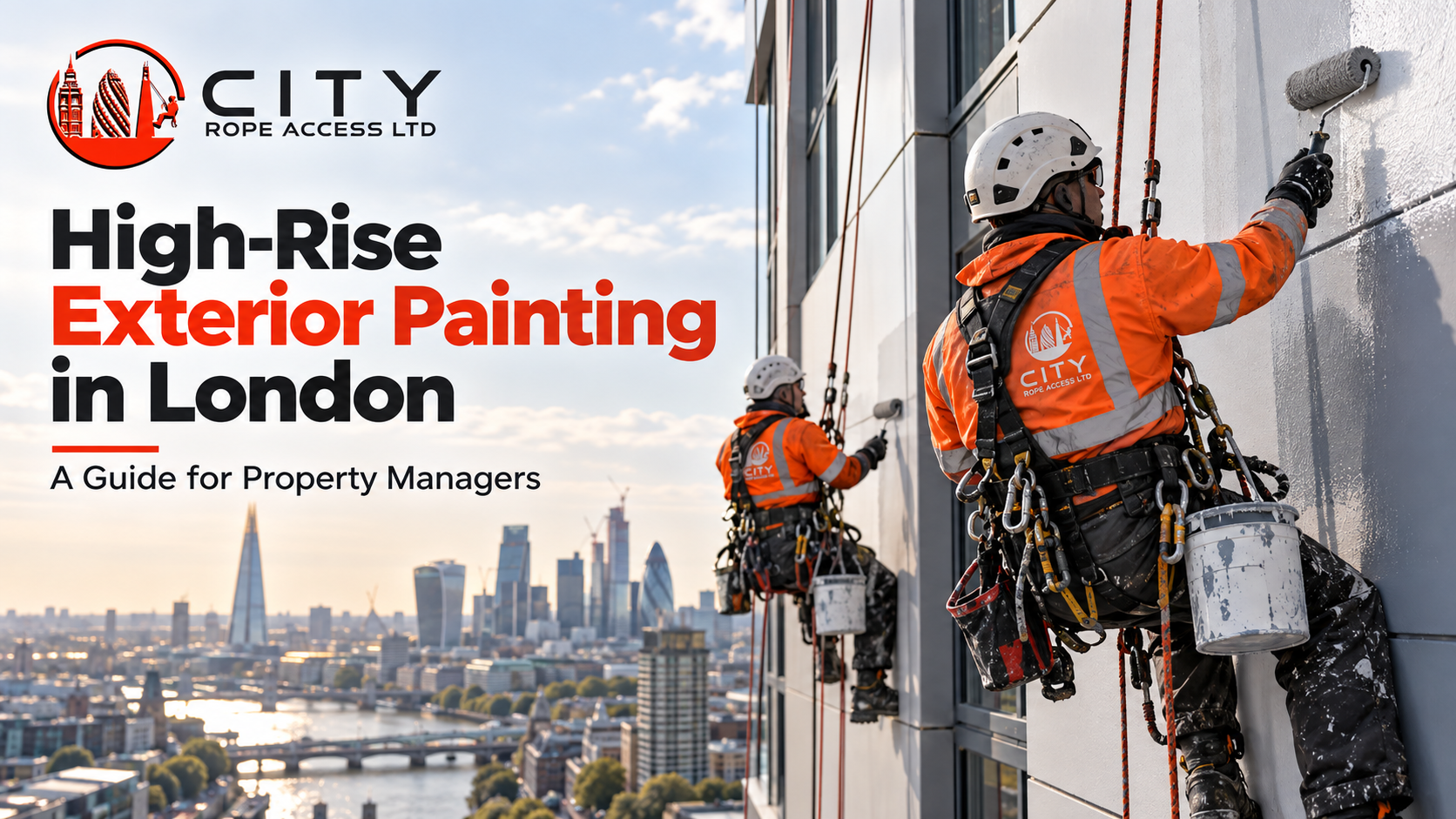
High-rise exterior painting involves much more than applying a new coat of paint to a building. Before work begins, the condition of the existing surface, access requirements, localised defects, weather exposure and the type of coating all need to be considered.
For property managers and building owners in London, this is particularly important on taller commercial and residential buildings where external elevations can be difficult to inspect or maintain from ground level.
This guide explains what should be considered when planning exterior painting at height, how different access methods can be used and why surface preparation is often one of the most important parts of the project.
What Is High-Rise Exterior Painting?
High-rise exterior painting refers to painting and coating work carried out on external areas of tall or difficult-to-access buildings.
Typical areas can include:
- External façades
- Rendered elevations
- Concrete surfaces
- Metal elements
- Window surrounds
- Parapets
- Balcony elevations
- Roof-level structures
- Decorative external features
The appropriate approach depends on the building, the surface condition and the extent of the work required.
Why Surface Condition Should Be Checked Before Painting
Painting over a defective or poorly prepared surface can hide a problem temporarily without addressing the underlying cause.
Before repainting an external elevation, it may be necessary to check for:
- Loose or flaking coatings
- Cracks in render or masonry
- Failed sealant joints
- Water staining
- Corrosion on metal elements
- Localised concrete deterioration
- Damaged or unstable substrate
- Areas affected by persistent moisture
Where defects cannot be assessed properly from ground level, a close-up inspection can help determine whether repairs should be completed before painting begins.
For difficult-to-access elevations, see our rope access building inspections and façade surveys .
Key Areas to Check on an External Elevation
Exterior painting is usually more effective when the underlying surface has first been inspected and prepared for the proposed coating.
Existing Coating
Loose, cracked or peeling paint may need to be removed or stabilised before a new coating system is applied.
Cracks & Defects
Cracks, damaged render, masonry defects or deteriorated concrete may require repair before decorative work continues.
Moisture & Water Ingress
Water staining or persistent damp areas should be investigated rather than simply covered with another layer of paint.
Sealant Joints
Failed perimeter or movement joints can contribute to localised moisture problems and may require separate remedial work.
Surface Cleanliness
Dirt, loose material and other contamination can affect preparation and the way a new coating bonds to the surface.
Access Requirements
The geometry of the elevation and size of the work area will influence whether rope access, scaffolding or another access method is appropriate.
Surface Preparation for High-Rise Painting
Preparation can have a significant influence on the outcome of an exterior painting project. The exact preparation method depends on the substrate and its existing condition.
It can involve:
- Removing loose or unstable paint
- Cleaning suitable surfaces
- Localised filling and repair
- Preparing cracked areas
- Treating suitable exposed metal components
- Addressing defective joints where required
- Preparing the substrate for the selected coating system
A severely deteriorated elevation may require repair work before painting should be considered.
Where wider repairs are necessary, City Rope Access also provides rope access building maintenance and repair services for difficult-to-access external areas.
Choosing the Right Coating for an Exterior Building
There is no single coating suitable for every external building surface. Different substrates, existing coatings and exposure conditions can require different products and preparation methods.
Factors that may need to be considered include:
- The material being painted
- The condition of the existing coating
- Compatibility with the substrate
- Exposure to rain and weather
- Manufacturer preparation requirements
- Required finish
- Colour specification
- Building management requirements
Where necessary, the proposed coating system should be selected with reference to the actual surface and the manufacturer’s technical guidance.
Rope Access Painting for High-Rise Buildings
Rope access can be useful where painters need to reach localised or vertical areas of a building that would otherwise be difficult to access.
This can include elevations above roads, courtyards, roof edges or restricted ground-level areas.
For suitable projects, technicians can move between work areas without the need to provide continuous access to the entire elevation.
However, rope access is not automatically the correct method for every exterior painting project.
Our dedicated rope access painting services in London cover high-level external painting, preparation and suitable coating work on difficult-to-access buildings.
Rope Access, Scaffolding or MEWP?
The most appropriate access system should be determined by the building and the scope of work.
Common options include:
- Rope access
- Scaffolding
- Mobile elevated work platforms (MEWPs)
- Permanent building access systems
- A combination of access methods
Rope access may be suitable where the work is concentrated in specific high-level areas or where ground access is restricted.
Scaffolding may be more appropriate where a very large elevation requires continuous access or where substantial amounts of equipment and materials need to remain at the work face.
MEWPs may also be useful where suitable ground access and working positions are available.
The decision should be based on the actual project rather than assuming that one method is always faster or cheaper.
Painting a Building While It Remains Occupied
Many commercial and residential buildings remain occupied while external maintenance is carried out.
Project planning may therefore need to consider:
- Entrances and exits
- Residents or building users
- Pedestrian routes
- Windows and balconies
- Ground-level exclusion areas
- Deliveries
- Other contractors working on site
- Access to roof areas
The exact arrangements depend on the building and the areas being worked on.
A Typical High-Level Exterior Painting Process
Review the Building
Identify the work areas, surface types, visible defects and access requirements.
Define Preparation
Determine what cleaning, removal, localised repair or other preparation may be required.
Complete the Painting
Prepare and coat the agreed areas in accordance with the defined project scope.
Review the Work
Completed areas can be checked and, where included in the scope, photographed for the client.
Weather and Exterior Painting at Height
External painting is influenced by weather conditions. Rain, temperature, wind and surface moisture can affect when preparation and coating work can reasonably be undertaken.
Coating manufacturers can also specify particular application conditions for their products.
For this reason, an exterior painting programme may need a degree of flexibility, particularly when work is exposed at height.
Common Problems Found Before Repainting
A repainting project can reveal defects that were difficult to see from ground level.
Common examples include:
- Peeling paint around window openings
- Cracked render
- Localised corrosion
- Open joints
- Failed mastic or sealant
- Water staining
- Loose surface material
- Minor masonry deterioration
These issues do not all require the same treatment, so they should not automatically be covered with a new coating.
Should Cracks Be Painted Over?
Visible cracks should normally be assessed before simply covering them with paint.
Some may relate only to a localised surface finish, while others can indicate movement, failed render, deterioration or another underlying issue.
The correct response depends on the material, location and cause of the crack. Where the cause is unclear or potentially significant, further specialist assessment may be appropriate.
What About Failed Sealant Around Windows?
Painting is not a substitute for defective external joints.
If mastic or sealant has separated, cracked or deteriorated, the joint may need separate remedial work.
You can learn more in our guide to window sealant failure and repair .
For high-level sealant work, see our rope access mastic and sealant services .
What Information Should a Property Manager Provide Before a Quote?
Providing useful project information at the beginning can make it easier for a contractor to understand the likely scope.
Helpful information can include:
- Building address
- Photographs of the elevations
- Approximate building height
- Areas requiring painting
- Existing surface material
- Known defects
- Previous coating information, where available
- Roof access arrangements
- Ground-level access restrictions
- Required colours or finish
Where photographs do not show the condition clearly, an inspection may be useful before a full painting scope is prepared.
High-Rise Exterior Painting for Commercial Buildings
Commercial properties can present additional planning requirements because work may need to take place around employees, customers, tenants or members of the public.
Office buildings, hotels, retail properties and mixed-use developments can also have several different surface types across the same elevation.
A high-level painting programme should therefore clearly identify which areas are being treated, what preparation is included and whether any repairs form part of the same project.
When Should Painting Be Combined With Building Maintenance?
Exterior painting can sometimes be carried out alongside other high-level maintenance work, particularly where several defects occur across the same elevation.
Examples can include:
- Localised masonry repairs
- Concrete repairs
- Sealant replacement
- Minor render repairs
- Leak-related remedial work
- Cleaning and surface preparation
Combining work does not automatically mean every defect can be addressed within the same scope, but identifying related maintenance requirements before painting can help avoid covering over areas that still require attention.
How Much Does High-Rise Exterior Painting Cost in London?
There is no single fixed price for high-rise exterior painting because the scope can vary considerably between buildings.
Factors that can influence a quotation include:
- Size of the elevation
- Number of work areas
- Building height and geometry
- Access method
- Condition of the existing surface
- Preparation required
- Repair work required before painting
- Coating specification
- Site access and project restrictions
For this reason, quotations should ideally be compared on the basis of the actual scope rather than the headline price alone.
Choosing a High-Rise Painting Contractor
When comparing contractors, check whether the company has experience with both the access method and the type of exterior work required.
Useful questions can include:
- What preparation is included?
- Are repairs included or quoted separately?
- Which elevations are included?
- What coating system is proposed?
- How will the work area be accessed?
- Will photographs of completed areas be provided?
- What happens if additional defects are discovered?
- Are materials included?
A clearly defined quotation makes it easier to compare contractors on a similar basis.
Planning High-Rise Exterior Painting in London?
City Rope Access provides high-level exterior painting and preparation services for commercial, residential and difficult-to-access buildings across London.
Send us photographs of the building, details of the elevations and a description of the areas that require painting or repair.
You can also view our dedicated rope access painting and decorating service .
Frequently Asked Questions
Can rope access be used for exterior painting?
Yes, where the building and project are suitable. Rope access can provide direct access to high-level external areas without providing a continuous working platform across the entire façade.
Is rope access always better than scaffolding for painting?
No. The most appropriate method depends on the size of the work area, building geometry, project duration, equipment requirements and site access. Some projects may be more suited to scaffolding or a MEWP.
Should a high-rise building be inspected before painting?
An inspection can be useful where the condition of the external surface is unclear, where defects are visible or where access from ground level is limited.
Can damaged render be painted over?
Damaged or unstable render may require repair before a new coating is applied. The appropriate treatment depends on the condition and cause of the defect.
Can exterior painting stop water ingress?
Painting alone should not be assumed to solve a water ingress problem. The source of the moisture should be investigated because failed joints, cracks, roof-level defects or other building components may be involved.
What causes exterior paint to peel?
Possible factors include deterioration of the existing coating, poor surface preparation, moisture, contamination or incompatibility between the coating and substrate. The actual cause should be assessed on the individual building.
Can painting and building repairs be completed during the same project?
They can sometimes be combined where the work areas and repair requirements are suitable. The repair scope should be identified before the final coating work is completed.
What information is needed for a high-rise painting quotation?
Useful information includes the building location, photographs, approximate height, affected elevations, surface type, known defects and any available information about the existing coating or required finish.