

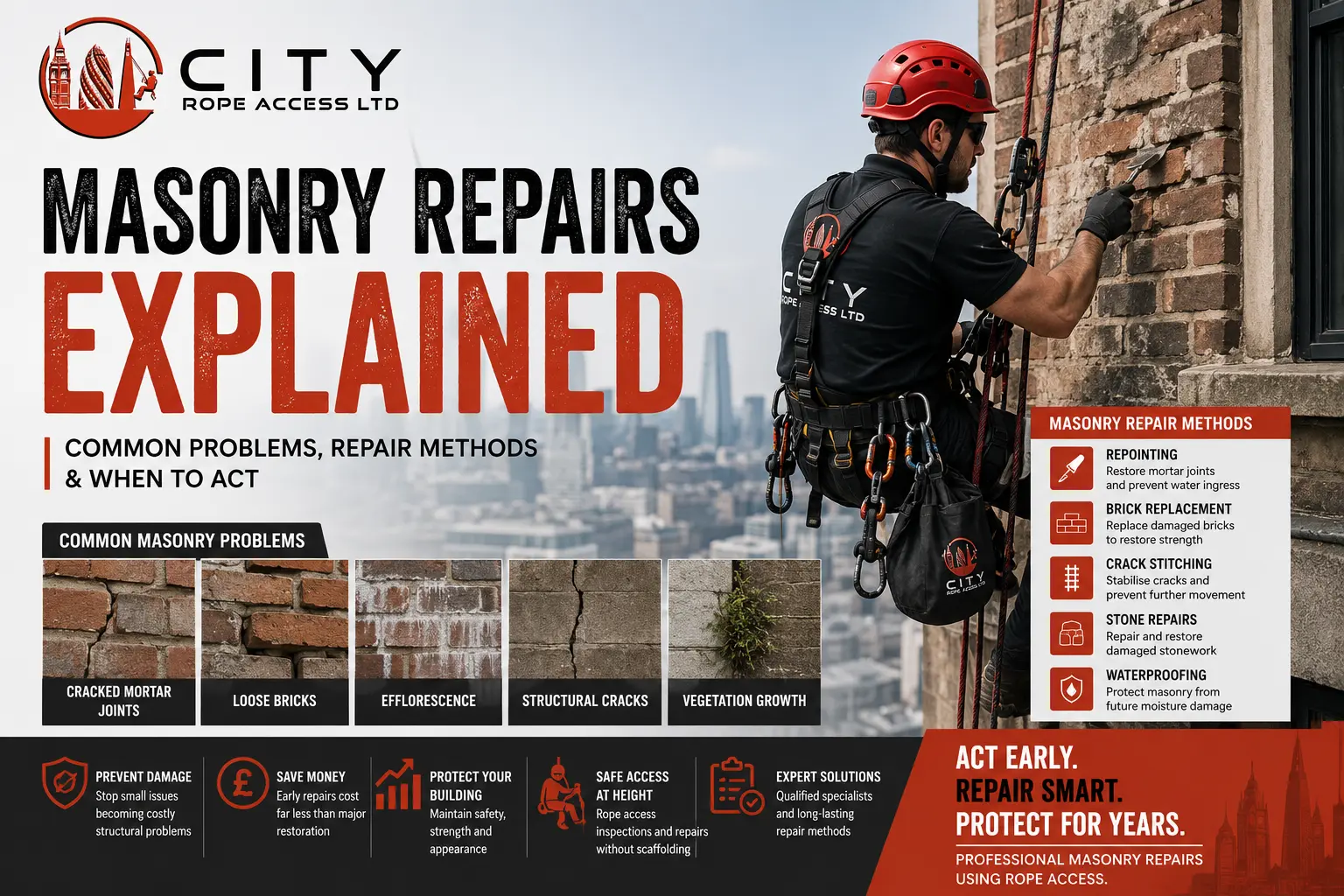
Masonry Repairs Explained – Common Problems, Repair Methods & When to Act
Brick and stone buildings are designed to last for decades, but even the strongest masonry isn’t immune to weather, pollution and the natural ageing process.
Small cracks in mortar joints, loose bricks or water staining may appear harmless at first. Unfortunately, these seemingly minor issues often signal the beginning of more significant structural deterioration.
Without timely repairs, moisture can penetrate deep into the building fabric, causing frost damage, corrosion of hidden steel elements and expensive structural repairs.
For property managers, landlords and commercial building owners, understanding when masonry requires attention is essential for protecting both the building and long-term maintenance budgets.
What Are Masonry Repairs?
Masonry repairs involve restoring damaged brickwork, stonework, mortar joints and other structural elements to ensure a building remains safe, weatherproof and structurally sound.
Depending on the condition of the building, repairs may include:
- brick replacement
- stone repairs
- mortar repointing
- crack stitching
- façade stabilisation
- lintel repairs
- waterproofing
- sealant replacement
Professional masonry repairs not only restore appearance but also prevent further deterioration.
Why Masonry Deteriorates
Even well-constructed buildings are constantly exposed to environmental stress.
Common causes include:
- heavy rainfall
- freeze-thaw cycles
- air pollution
- structural movement
- thermal expansion
- poor drainage
- vegetation growth
- ageing mortar
Over time these factors weaken masonry, allowing water to penetrate deeper into the structure.
Warning Signs You Should Never Ignore
Many serious masonry failures begin with defects that are easy to overlook.
Watch for:
- cracked mortar joints
- loose bricks
- bulging brickwork
- missing mortar
- water staining
- efflorescence (white salt deposits)
- rust marks
- vegetation growing from walls
- displaced coping stones
- visible movement around windows
If you notice these issues, it’s worth arranging a professional inspection before repairs become significantly more expensive.
Learn how to identify hidden warning signs in our guide:
How to Spot Façade Defects Before They Become Dangerous
Common Masonry Repair Methods
Different defects require different repair techniques.
Repointing
Over time, mortar gradually deteriorates.
Repointing removes damaged mortar and replaces it with new material, restoring strength while preventing water penetration.
Brick Replacement
Individual damaged bricks can often be removed and replaced without rebuilding large sections of the wall.
This restores both appearance and structural integrity.
Crack Stitching
Structural movement sometimes causes long horizontal or stepped cracks.
Specialist stainless steel reinforcement bars can stabilise these cracks without major rebuilding work.
Stone Repairs
Historic and commercial stone façades often require specialist repair techniques including:
- stone replacement
- resin repairs
- mortar repairs
- cleaning
- consolidation
Waterproofing
Once repairs have been completed, appropriate waterproofing treatments may help reduce future moisture penetration while allowing the masonry to breathe.
Why Early Repairs Save Money
Many property owners delay masonry repairs because the defects appear cosmetic.
Unfortunately, water rarely remains on the surface.
Once moisture enters the wall, it can lead to:
- damaged insulation
- internal damp
- mould growth
- concrete deterioration
- steel corrosion
- structural movement
Repairing a few damaged mortar joints today is considerably less expensive than rebuilding an entire section of façade several years later.
Our Preventative Building Maintenance Guide
explains why planned maintenance consistently reduces long-term repair costs.
Masonry Repairs at Height
Many masonry defects occur several storeys above ground level.
These areas are difficult to inspect safely without specialist access.
Using professional Rope Access Services
technicians can inspect, photograph and repair high-level masonry without the expense and disruption associated with full scaffolding.
Rope access is particularly suitable for:
- office buildings
- apartment blocks
- hotels
- schools
- industrial facilities
- listed buildings
Masonry Repairs Often Reveal Other Problems
Brickwork defects rarely occur in isolation.
During inspections, technicians frequently discover:
- failed sealants
- damaged concrete
- loose cladding
- deteriorating roof details
- blocked drainage
- water ingress
For this reason, a full building inspection often provides better value than repairing only the visible defect.
Our Commercial Roof Inspection Guide
explains how roof defects can contribute to masonry deterioration.
How Often Should Masonry Be Inspected?
Commercial buildings should undergo regular inspections to identify defects before they become major structural problems.
General recommendations include:
Every Year
- Visual façade inspection
- Roof inspection
- Drainage checks
Every 3–5 Years
- Close-up masonry survey
- High-level inspection
- Mortar assessment
- Sealant inspection
Older buildings or those exposed to severe weather may require more frequent assessments.
Choosing the Right Repair Contractor
Not every contractor specialises in masonry repairs at height.
Look for companies that provide:
- IRATA-certified rope access technicians
- detailed inspection reports
- photographic evidence
- experience with commercial buildings
- long-term repair recommendations
- safe working practices
Choosing an experienced contractor helps ensure repairs address the root cause of the problem rather than simply covering visible damage.
Protect Your Building Before Minor Defects Become Major Repairs
Masonry defects rarely improve on their own.
Small cracks, deteriorating mortar and loose bricks usually become more serious over time as water penetrates deeper into the structure.
Regular inspections and timely repairs protect both the appearance and structural integrity of commercial buildings while helping property owners avoid expensive emergency repairs.
If you’ve noticed signs of deteriorating brickwork, damaged mortar or water ingress, the experienced team at City Rope Access provides professional masonry inspections and repair solutions using safe, efficient rope access techniques across London and the surrounding areas.
Frequently Asked Questions
What are masonry repairs?
Masonry repairs involve restoring damaged brickwork, stonework and mortar to maintain the structural integrity and weather resistance of a building.
What causes masonry to deteriorate?
The most common causes include weather exposure, moisture, freeze-thaw cycles, structural movement, ageing mortar and pollution.
How do I know if my building needs masonry repairs?
Common warning signs include cracked mortar, loose bricks, bulging walls, water staining, efflorescence and visible cracks around openings.
Can masonry repairs be completed using rope access?
Yes. Rope access is ideal for inspecting and repairing high-level masonry on commercial buildings without the need for extensive scaffolding.