

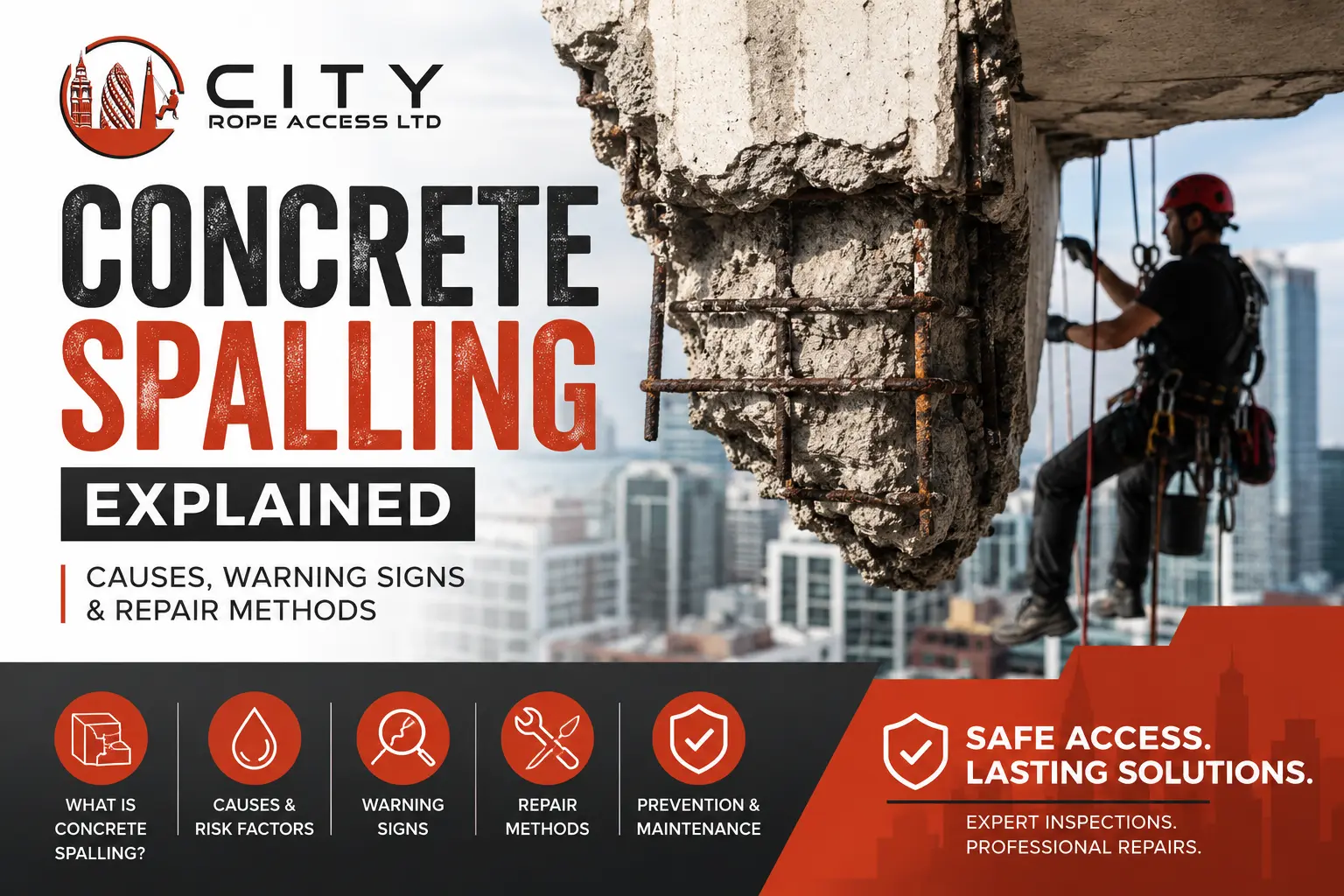
Concrete deterioration often starts with relatively small warning signs. A crack, rust stain or localised patch of damaged surface Concrete deterioration often starts with relatively small warning signs. A crack, rust stain or localised patch of damaged surface may appear minor at first, but these symptoms can indicate deterioration developing within the concrete.
One of the most common forms of deterioration is concrete spalling, where sections of the concrete surface begin to crack, flake or break away. In reinforced concrete, this can sometimes expose the steel reinforcement beneath.
The cause is not always obvious from ground level, and visible damage may represent only part of the affected area. For that reason, deteriorating concrete should be assessed before a repair method is selected.
This guide explains what concrete spalling is, why it happens, the warning signs to look for and how damaged concrete is typically assessed and repaired.
What Is Concrete Spalling?
Concrete spalling is the breakdown or detachment of the outer surface of concrete. It may appear as flaking, cracking, delamination or sections of material breaking away.
In reinforced concrete, deterioration can sometimes progress until the steel reinforcement inside the structure becomes visible.
Concrete spalling can affect areas such as:
- Balconies
- Car parks
- Commercial buildings
- Apartment blocks
- Concrete columns
- Beams
- Parapets
- External staircases
- Façade elements
The extent and significance of the damage depends on the cause, depth of deterioration and the role of the affected concrete element.
Why Does Concrete Spalling Happen?
Concrete is durable, but it can deteriorate over time as a result of moisture, environmental exposure, movement and changes within the material itself.
Several mechanisms can contribute to spalling.
Water Penetration
Moisture can enter concrete through cracks, porous areas, defective joints or other weaknesses in the surrounding building envelope.
Where water reaches embedded steel reinforcement, corrosion may develop. This can contribute to cracking and deterioration of the surrounding concrete.
Corrosion of Reinforcement
Steel reinforcement is normally protected by the alkaline environment within concrete. When that protection is reduced and corrosion begins, corrosion products can occupy more volume than the original steel.
The resulting pressure can contribute to:
- Cracking
- Delamination
- Bulging concrete
- Loose surface material
- Spalling
Freeze-Thaw Exposure
Water within cracks or pores can freeze when temperatures fall sufficiently low. Repeated freezing and thawing may contribute to surface deterioration in exposed concrete, particularly where moisture is able to penetrate the material.
Carbonation
Carbon dioxide from the atmosphere can gradually penetrate concrete and reduce its alkalinity. Where carbonation reaches embedded reinforcement, the protective environment around the steel may be reduced, increasing the likelihood of corrosion where moisture and oxygen are present.
Cracking and Water Ingress
Existing cracks can allow moisture to reach deeper parts of the concrete. If those cracks are left uninvestigated, deterioration may continue beyond what is visible at the surface.
This is why cracking and recurring water ingress should be assessed as part of the wider condition of the façade rather than treated only as a cosmetic issue.
For a broader overview of defects worth monitoring, see our building façade inspection checklist .
Early Warning Signs of Concrete Deterioration
Concrete spalling often develops gradually. Identifying early warning signs can help determine whether closer inspection is required.
Signs worth investigating include:
- Cracking in the concrete surface
- Rust staining
- Bulging or uneven areas
- Surface flaking
- Hollow-sounding or delaminated areas
- Exposed reinforcement
- Loose concrete fragments
- Water staining
- Recurring deterioration around previously repaired areas
Not every crack or stain indicates serious deterioration, but combinations of these symptoms can justify a more detailed assessment.
Why Concrete Spalling Can Become a Safety Concern
The main concern with spalling is not simply appearance. Where concrete has become loose or detached, sections of material may fall from the building.
This is particularly important on:
- Balconies
- Parapets
- External beams
- Façades above entrances
- Areas above public walkways
- High-level concrete features
Deterioration may also expose reinforcement or allow more moisture to enter the affected area, which can contribute to further damage.
Where loose concrete is suspected, the area should be assessed and managed according to the condition and location of the defect.
How Is Concrete Spalling Assessed?
The first step is to understand the extent and likely cause of the deterioration. Visible surface damage does not always show how far the problem extends beneath the surface.
An assessment may consider:
- Location and size of the damaged area
- Crack patterns
- Rust staining
- Condition of exposed reinforcement
- Signs of moisture penetration
- Adjacent façade defects
- Previous repairs
- Accessibility of the affected area
Where damaged concrete is located on upper floors or difficult-to-access façades, see our rope access concrete, brick and stone repair services in London for high-level assessment and remedial work.
How Is Concrete Spalling Repaired?
The repair method depends on the extent of the damage, the condition of the reinforcement and the role of the affected concrete element.
A typical localised repair may include the following stages.
1. Removing Loose or Deteriorated Concrete
Unsound material is removed from the agreed repair area so that the remaining concrete can be assessed and prepared for repair.
2. Assessing the Reinforcement
Where reinforcement has been exposed, its condition should be reviewed. Corrosion, section loss or other deterioration may affect the repair specification.
3. Preparing the Repair Area
The repair area is prepared according to the selected repair system. This may include cleaning the substrate and reinforcement and ensuring loose material or contamination is removed.
4. Reinstating the Concrete Profile
An appropriate repair material is used to rebuild the damaged area in accordance with the agreed repair specification.
5. Protective Finishes Where Required
Depending on the project, a compatible protective coating or finish may form part of the repair system to help protect the repaired surface from future exposure.
When Can Rope Access Be Useful for Concrete Repairs?
Rope access can be useful where localised concrete defects are located on upper floors, balconies, parapets or other difficult-to-reach sections of a building façade.
It generally requires less temporary access infrastructure than full scaffolding and can allow technicians to reach specific repair areas directly.
This can be particularly useful for:
- Localised façade repairs
- Balcony edges
- Parapets
- Concrete beams
- Columns
- High-level architectural elements
- Close-up inspection of isolated defects
However, rope access is not automatically the correct solution for every concrete repair project. The most appropriate access method depends on the extent of deterioration, repair specification, location of the defect and expected duration of the works.
Large or extensive concrete repair projects may require scaffolding or another access system.
Can the Risk of Concrete Spalling Be Reduced?
Not every instance of concrete deterioration can be prevented, but identifying cracks, water penetration and early signs of corrosion can allow maintenance or investigation to take place before more extensive surface damage develops.
A building maintenance programme may include:
- Visual monitoring of concrete surfaces
- Investigation of cracking and rust staining
- Maintenance of drainage and waterproofing details
- Inspection of areas affected by recurring water ingress
- Close-up assessment where deterioration is suspected
- Monitoring of previously repaired areas
Inspection frequency should reflect the age, condition, construction and exposure of the building together with any relevant professional recommendations.
Concrete Spalling and Water Ingress
Water ingress can play an important role in concrete deterioration, particularly where moisture is able to reach embedded reinforcement.
However, the visible damaged area is not always the original source of moisture. Water may enter through cracks, failed sealant, parapets, roof details, façade penetrations or drainage defects before reaching the affected concrete.
Where recurring moisture is present, the surrounding building envelope should therefore be considered as part of the investigation.
For difficult-to-access leaks, see our leak detection and waterproofing service .
Concrete Spalling on Balconies
Balconies are common locations for concrete deterioration because they are exposed to rain, temperature changes and weathering while also containing edges and surfaces where moisture can collect or penetrate.
Warning signs can include:
- Cracking along balcony edges
- Rust staining
- Loose concrete beneath the slab
- Exposed reinforcement
- Water staining
- Previous repairs beginning to deteriorate
For more information about high-level balcony defects, see our guide to balcony repairs on high-rise buildings .
Do Not Ignore Loose or Deteriorating Concrete
Concrete spalling rarely develops without warning. Cracking, rust staining, surface delamination and loose material can all indicate that the affected area requires closer inspection.
The appropriate response depends on the extent and cause of the deterioration. Some defects may require localised repair, while others may justify a wider condition assessment.
The important point is to avoid treating deteriorating concrete as a purely cosmetic defect without first understanding what is happening beneath the surface.
Need High-Level Concrete Inspection or Repair?
City Rope Access provides concrete repair and façade remedial services for commercial, residential and high-rise buildings across London. If you have noticed cracking, rust staining, loose concrete or another difficult-to-access defect, send us photographs and details of the affected area.
Frequently Asked Questions
What does concrete spalling look like?
Concrete spalling may appear as flaking, cracking, bulging, loose surface material or sections of concrete breaking away. Rust staining or exposed reinforcement may also be visible in some affected areas.
What causes concrete spalling?
Possible causes include reinforcement corrosion, moisture penetration, carbonation, freeze-thaw exposure, cracking and other forms of material deterioration. The actual cause should be assessed before a repair method is selected.
Is concrete spalling dangerous?
It can become a safety concern where sections of concrete are loose or may fall, particularly on façades, balconies, parapets and areas above entrances or public spaces. The significance depends on the location, extent and condition of the affected element.
Can concrete spalling be repaired?
Many localised spalled areas can be repaired, but the repair specification depends on the extent of deterioration, condition of reinforcement and function of the concrete element. A suitable assessment should be carried out before remedial work begins.
Can rope access be used for concrete repairs?
Rope access can be suitable for localised concrete repairs and inspections on many high-level or difficult-to-access façade areas. The appropriate access method depends on the building, extent of work and repair specification.
Should spalled concrete simply be covered with new mortar?
Repairing only the visible surface may not address the cause of deterioration. Loose material, reinforcement condition, moisture and the surrounding concrete should be considered before the repair area is reinstated.