

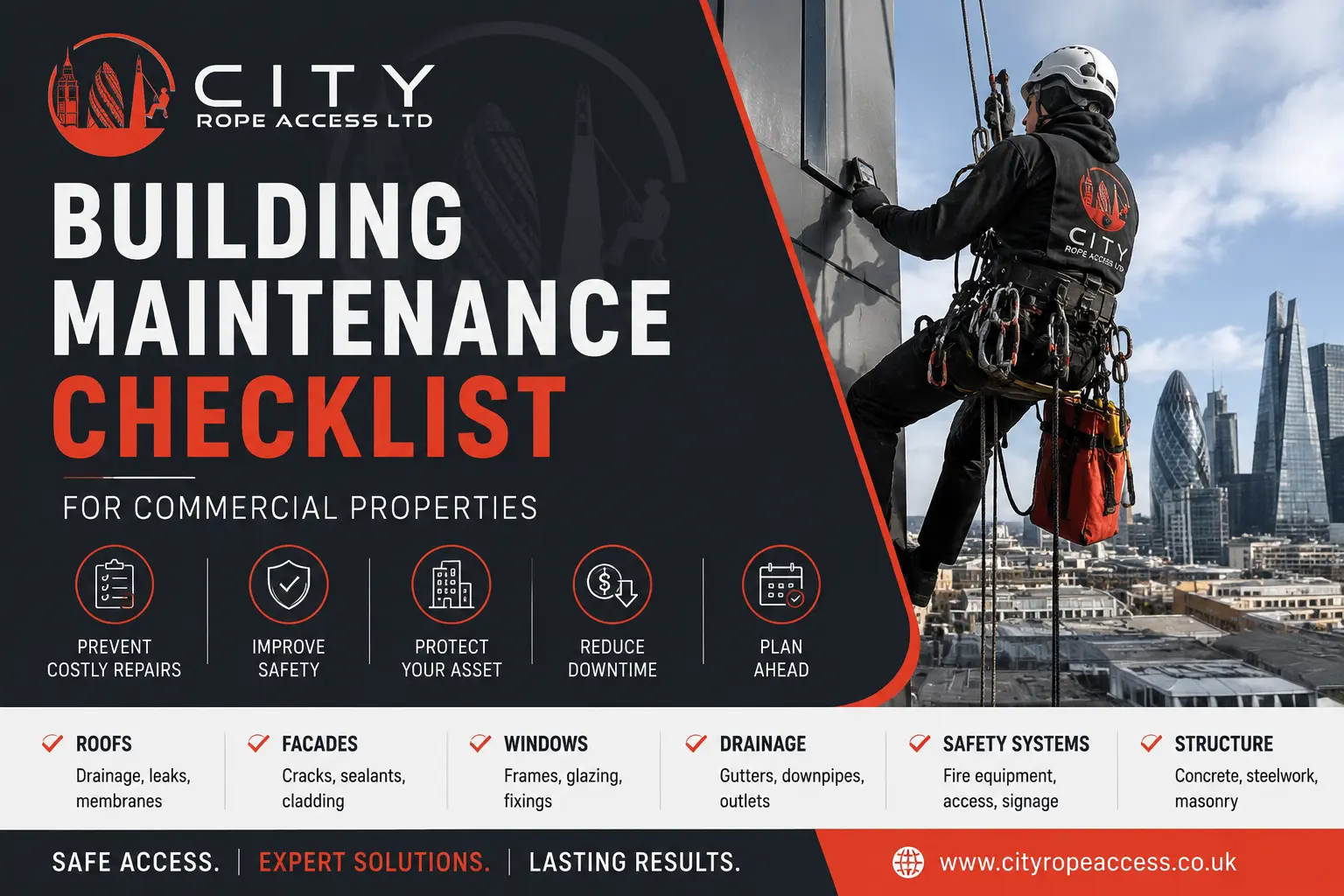
Building Maintenance Checklist for Commercial Properties
Managing a commercial building isn’t just about fixing problems when they appear. The most cost-effective properties are maintained proactively through scheduled inspections, preventive maintenance and early identification of defects before they become expensive repairs.
Whether you manage an office building, warehouse, residential block or retail premises, following a structured building maintenance checklist helps improve safety, extend the lifespan of building components and reduce unexpected maintenance costs.
This guide explains exactly what should be inspected, how often inspections should be carried out and when specialist rope access services become the safest and most efficient solution.
Why Preventive Building Maintenance Matters
Reactive maintenance is almost always more expensive than preventive maintenance.
A small crack in render can allow water to penetrate the building envelope. Left untreated, it may eventually lead to:
- structural deterioration
- concrete spalling
- corrosion of reinforcement
- mould growth
- internal leaks
- costly façade repairs
Routine inspections identify these issues early, allowing property managers to schedule repairs before they escalate. Preventive maintenance also improves compliance, supports insurance claims through documented inspections and extends the service life of critical building systems.
Daily Building Maintenance Checklist
Some items should be checked every day, especially in buildings with high occupancy.
Exterior
- Check entrances for hazards.
- Inspect access routes.
- Remove debris around entrances.
- Confirm external lighting is operational.
Interior
- Emergency exits remain unobstructed.
- Lifts operate correctly.
- Fire doors close properly.
- Stairwells remain clear.
- Toilets are fully operational.
- Water leaks are reported immediately.
Weekly Building Maintenance Checklist
Weekly inspections focus on identifying visible defects before they worsen.
Inspect:
- roof drainage outlets
- gutters
- external lighting
- handrails
- car parks
- loading bays
- perimeter fencing
- security systems
- CCTV
- access control systems
Also look for signs of:
- cracked masonry
- damaged sealants
- loose façade panels
- blocked rainwater outlets
Monthly Building Maintenance Checklist
Monthly inspections become more technical.
Roof
Check for:
- ponding water
- membrane damage
- flashing deterioration
- vegetation growth
- blocked outlets
Façade
Inspect:
- brickwork
- render
- expansion joints
- sealants
- glazing
- cladding
- movement cracks
High-rise buildings often require rope access technicians because many defects are invisible from ground level.
Mechanical Systems
Inspect:
- HVAC filters
- ventilation
- electrical rooms
- emergency generators
- pumps
- lighting systems
Quarterly Building Maintenance Checklist
Every three months, conduct a more detailed inspection.
Review:
- fire safety equipment
- emergency lighting
- drainage systems
- roof waterproofing
- façade movement joints
- plant rooms
- balconies
- access equipment
This is also an ideal opportunity to schedule a professional external building inspection.
Annual Building Maintenance Checklist
At least once each year, perform a comprehensive assessment of the building.
A complete inspection should include:
| Area | Inspection Items |
|---|---|
| Roof | Waterproofing, flashings, drainage |
| Façade | Cracks, movement, cladding, sealants |
| Windows | Frames, glazing, fixings |
| Gutters | Corrosion, blockages |
| Concrete | Spalling, exposed reinforcement |
| Steelwork | Corrosion |
| Drainage | Flow testing |
| Building Envelope | Water ingress |
| Safety Systems | Fire protection, access equipment |
Annual inspections help identify deterioration trends and provide documented evidence for maintenance planning and compliance.
Exterior Areas Often Overlooked
Many expensive repairs originate outside the building.
Property managers frequently overlook:
- parapet walls
- coping stones
- roof edge details
- window sealants
- façade joints
- expansion joints
- soffits
- rainwater outlets
These areas deteriorate slowly and often remain unnoticed until water damage becomes visible inside the building.
Signs Your Building Needs Immediate Attention
Arrange a professional inspection if you notice:
- water stains inside the building
- cracked render
- loose brickwork
- falling masonry
- leaking gutters
- damaged cladding
- rust stains
- bulging façades
- loose sealants
- recurring damp patches
These symptoms usually indicate that hidden defects are developing behind the visible surface.
Why Rope Access Makes Building Maintenance Easier
Traditional access methods such as scaffolding or mobile elevated work platforms are not always practical.
For occupied commercial buildings, rope access offers several advantages:
- minimal disruption
- faster mobilisation
- lower overall costs
- access to confined areas
- reduced environmental impact
- detailed close-up inspections
Qualified IRATA technicians can inspect, photograph and repair difficult-to-reach areas during the same visit, reducing downtime and eliminating the need for extensive temporary structures.
Common Defects Found During Building Inspections
Experienced inspectors regularly identify:
Failed sealants
Old sealants allow water penetration around windows and façade joints.
Concrete spalling
Reinforcement corrosion causes concrete to crack and detach.
Loose cladding
Fixings can deteriorate over time, creating serious safety risks.
Blocked gutters
Overflowing water damages façades and accelerates structural deterioration.
Cracked render
Hairline cracks frequently develop into larger defects if moisture enters the wall system.
Failed pointing
Mortar joints deteriorate, allowing moisture to penetrate masonry.
Early identification significantly reduces repair costs.
Creating a Preventive Maintenance Schedule
A maintenance checklist is only effective if inspections are scheduled consistently.
A practical schedule might look like this:
| Frequency | Tasks |
|---|---|
| Daily | Safety checks, entrances, leaks |
| Weekly | External walkaround, drainage, lighting |
| Monthly | Roof, façade, HVAC |
| Quarterly | Fire systems, external inspection |
| Annually | Full condition survey |
Maintaining inspection records helps prioritise repairs, demonstrate compliance and plan future budgets. Digital records with photographs and follow-up actions are increasingly recommended because they improve accountability and simplify insurance or regulatory reviews.
Final Thoughts
A structured Building Maintenance Checklist for Commercial Properties is one of the simplest ways to protect a building’s value while reducing long-term repair costs.
Regular inspections help detect defects before they become major structural problems, improve occupant safety and make budgeting more predictable.
For high-rise or difficult-to-access buildings, combining routine maintenance with professional rope access inspections allows property managers to assess façades, roofs and external elements efficiently, ensuring issues are identified and addressed before they escalate.
FAQ
How often should commercial buildings be inspected?
Visual inspections should take place weekly or monthly, with a comprehensive condition survey at least once a year. Critical systems such as fire safety equipment may require more frequent checks depending on regulations and building use.
What is included in a building maintenance checklist?
A comprehensive checklist covers roofs, façades, drainage, HVAC, plumbing, electrical systems, fire safety equipment, common areas, structural elements and the building exterior.
Why is preventive maintenance important?
Preventive maintenance helps identify small issues early, reducing the likelihood of costly emergency repairs, improving safety and extending the lifespan of building components.
When is rope access the best inspection method?
Rope access is ideal for tall buildings or locations where scaffolding or MEWPs would be expensive, disruptive or impractical.
What are the most common building defects?
Water ingress, cracked render, deteriorated sealants, blocked gutters, concrete spalling and loose cladding are among the issues most frequently identified during commercial building inspections.
Can routine maintenance reduce repair costs?
Yes. Addressing minor defects early is generally far less expensive than repairing extensive structural damage caused by deferred maintenance. Studies and industry guidance consistently support preventive inspection programmes as a cost-saving strategy over the building lifecycle.